Dry Winters Affect Summer Water Quality
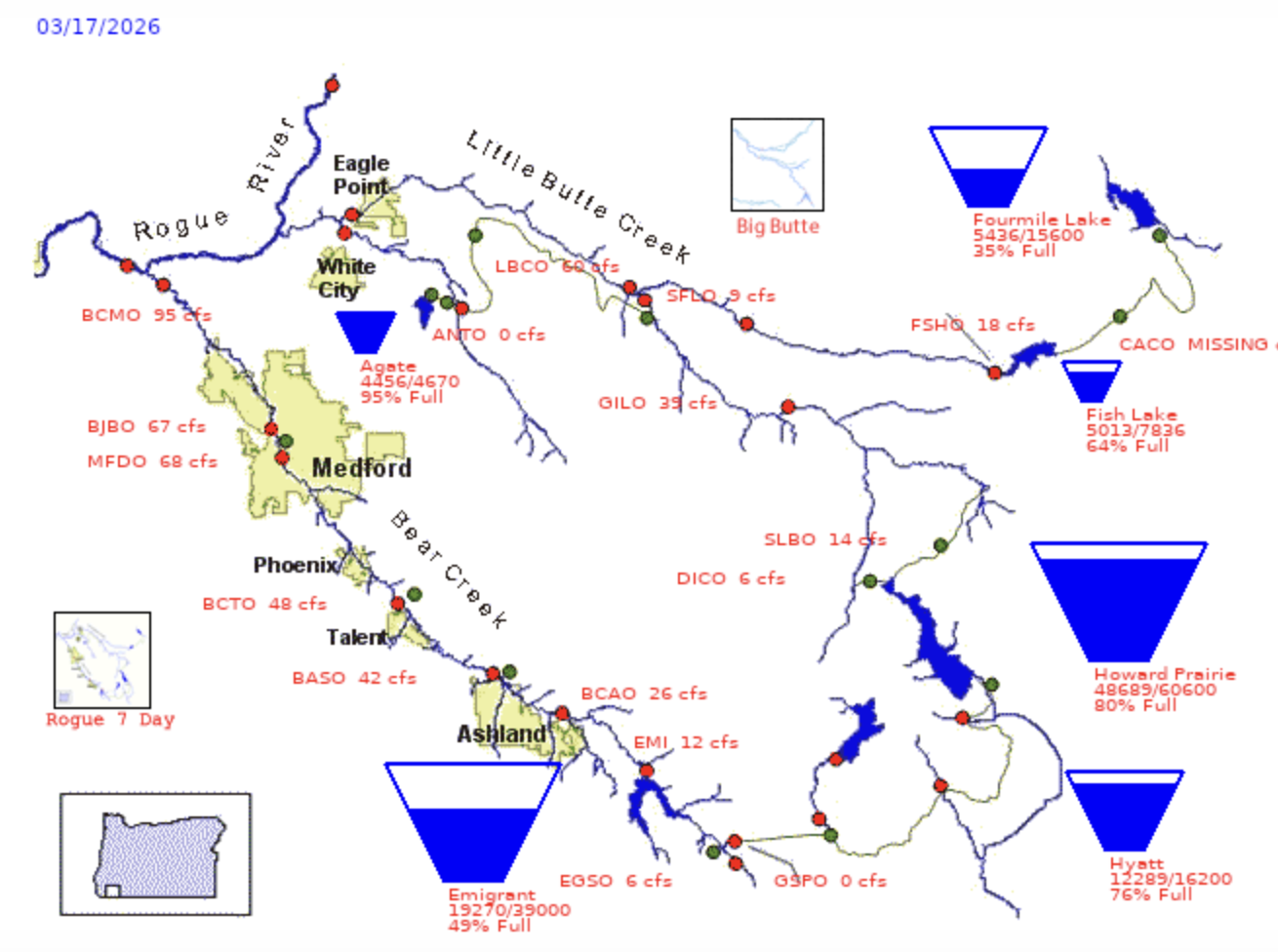
Credit: Jackson County
Written by Rogue Riverkeeper Program Manager, Frances Oyung
Our region is entering the spring of 2026 under the shadow of a deepening snow drought, raising questions about water supply and watershed health. Snowpack levels across parts of Oregon have dropped to historically low levels. While climate change can mean that we receive precipitation as rain instead of snow, snowpack is vital as it acts as a natural reservoir, slowly releasing water into watersheds in the summer. Water managers who control dam releases for the reservoirs in our region carefully balance the sometimes conflicting need for flood control, storage, and cold water releases for fish. When the snowpack that feeds our constructed reservoirs is lacking, the consequences ripple through agriculture, drinking water systems, and through the aquatic ecosystems in the Rogue Basin.
The summer volume of the mainstem Rogue is primarily controlled by the two large dams in the US Bureau of Reclamation’s Rogue River Basin Project, Jess Dam, creating Lost Creek Lake, and the Applegate Dam. As we get into summer without a snowpack in reserve, there will be challenges meeting all the needs and allocations for stored surface water. In watersheds like the Rogue, where irrigation withdrawals and municipal demand already place pressure on waterways, a snow drought can quickly translate into ecological stress which is why advocates for water quality push for improving watershed resilience and how we regulate and use water.
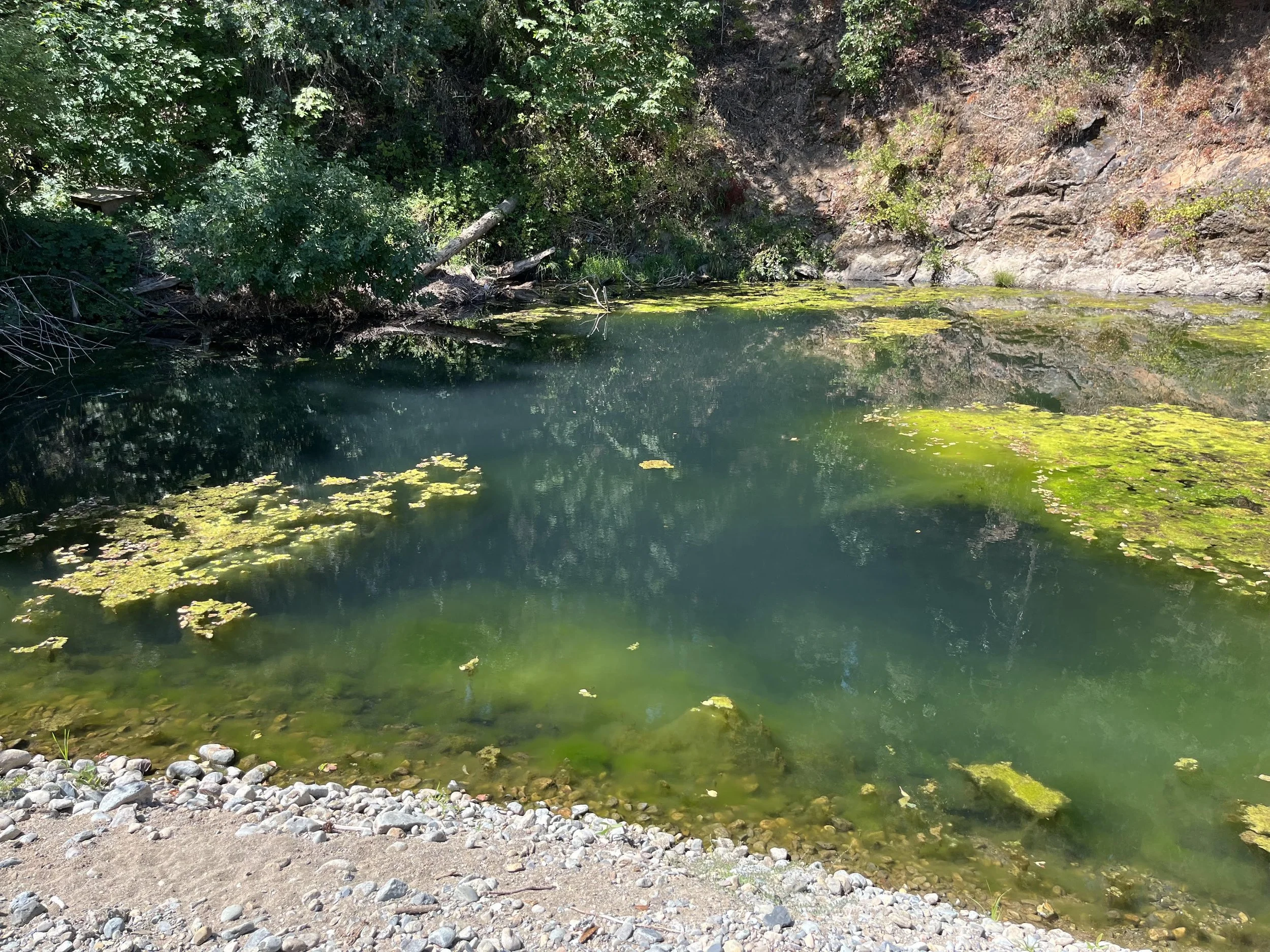
Algae growth in Grave Creek, summer 2025. Credit: Rogue Riverkeeper
Water quality is often one of the first casualties of drought. As flows shrink, rivers lose their ability to dilute contaminants. A reduction in the cooler groundwater entering streams means that streams have little defense against warming by the sun, especially if shading riparian vegetation has been removed. Warm water adds stress to cold-water species such as salmon and steelhead. The Bear Creek watershed is highly urbanized and because of higher levels of development and stream withdrawals for irrigation, the flows of Bear Creek and its tributaries are low and warm even when there isn’t a drought.
These water quality issues are precisely why the Clean Water Act requires states to set pollution limits and restoration plans for impaired waters. Currently, regulatory protections meant to safeguard water quality are evolving. The Rogue River Basin Temperature TMDL (Total Maximum Daily Load) is a science-based, quantitative plan designed to restore polluted water bodies. Because a 2019 court ruling directed the replacement of Temperature TMDLs to meet standards based on biologically protective criteria with a primary focus on restoring conditions for aquatic life, the Oregon Dept. of Environmental Quality (DEQ) is revising these TMDLs for numerous Oregon watersheds, including the Rogue. Public comment for this rule will open in October.
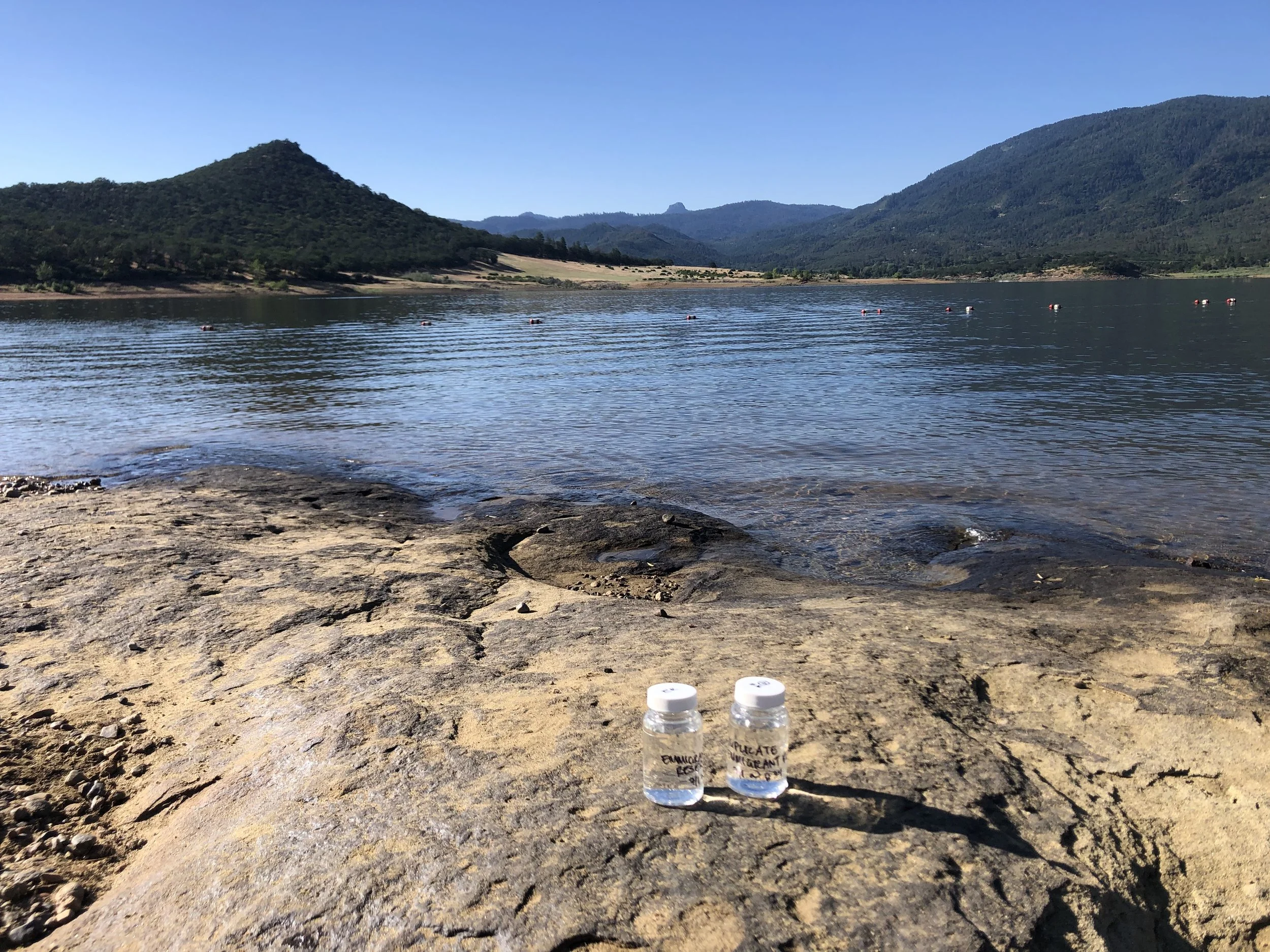
Rogue Riverkeeper’s summer Water Quality Monitoring Program samples, analyzes, and publishes E. coli bacteria reports for safe summer swimming in over a dozen popular swimming locations across the Rogue basin like Emigrant Lake (pictured here) every June to September.
The DEQ is also revising its Oregon’s Phase II MS4 Permit, which governs how many cities in our region manage runoff from streets, parking lots, and urban landscapes. Strong stormwater standards are protective in several ways by helping reduce pollutants entering rivers and limiting negative impacts from large precipitation events. Weakening or delaying such protections risks compounding the damage drought can inflict on aquatic ecosystems. Public comment for this rule will be due in April.
Healthy rivers require both adequate water quantity and strong water quality protections. Riparian restoration, managing floodplains for function, improved irrigation efficiency, and stricter stormwater controls can help buffer watersheds against extreme climate swings. But those measures require sustained commitment from state agencies, local governments, and the public—particularly as climate change alters seasonal precipitation and temperature.
Ultimately, the snow drought unfolding across Oregon is not just a story about water supply—it is about the health of entire watersheds. The Rogue River Basin has long been defined by its cold, clean water and the fish and wildlife that depend on it. As scientists warn that shrinking snowpacks may become the new normal, the region faces a choice: treat drought as a temporary emergency or recognize it as a signal to strengthen river protections. Safeguarding water quality, enforcing a strong Clean Water Act, and investing in resilient watershed management will determine whether the Rogue continues to sustain both communities and ecosystems in a drier future.