Understanding the WOTUS Rule: What It Means for the Rogue River Basin
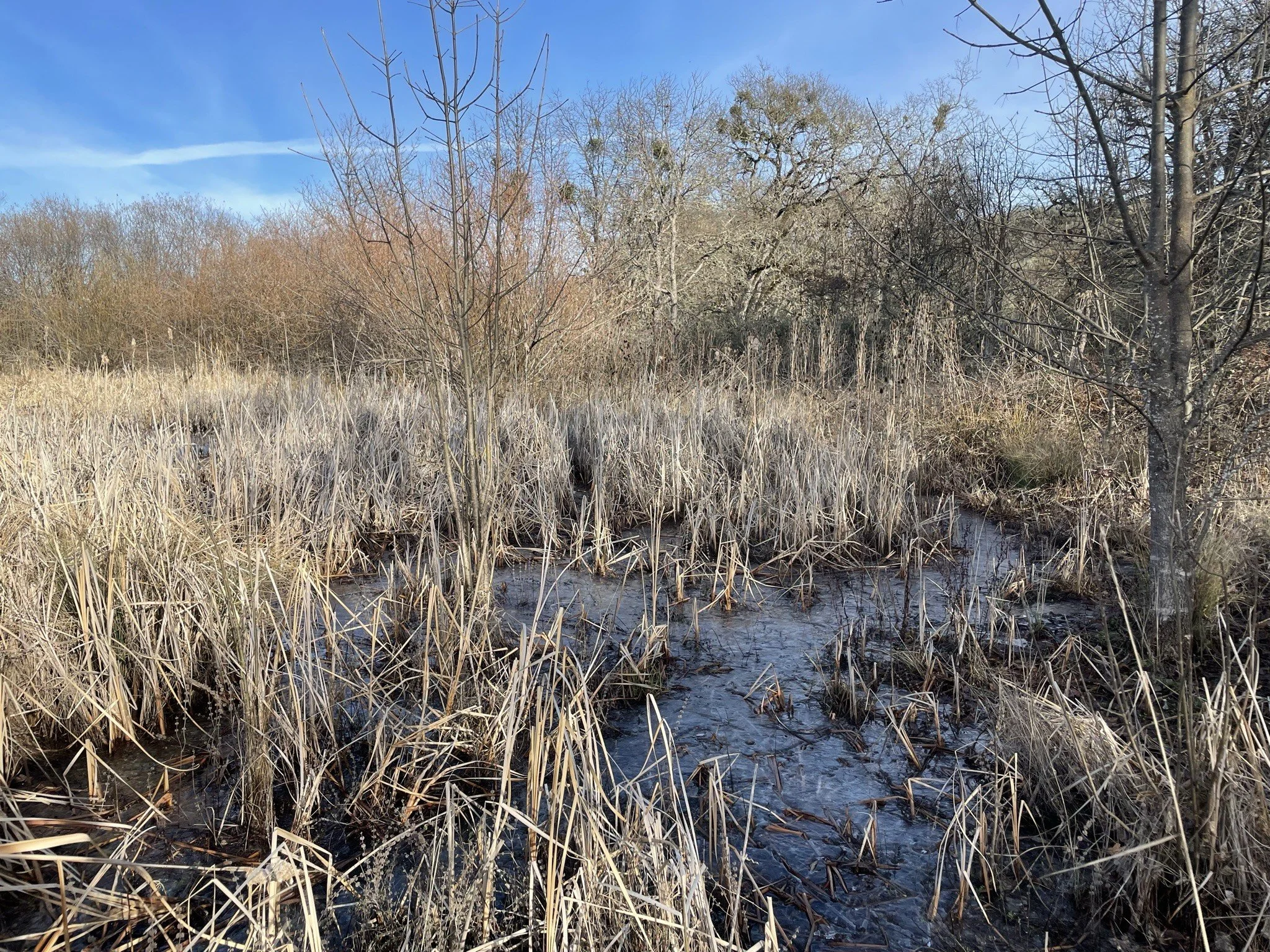
Wetland at Denman Wildlife Area in Central Point, OR. Credit: Haleigh Martin
A Rule That Keeps Changing
"Waters of the United States," or WOTUS, is the term that defines which rivers, streams, wetlands, and other water bodies are protected under the Clean Water Act and which are left to state, tribal, or local regulation instead. It sounds technical, but the definition determines who needs a federal permit before filling a wetland, discharging into a stream, or developing near water.
The definition has changed with nearly every presidential administration since 2015, following a pattern of new rules, court challenges, and reversals. The current round traces back to the Supreme Court's 2023 decision in Sackett v. EPA, which narrowed federal jurisdiction by requiring that a wetland have a "continuous surface connection" to a water that is itself "relatively permanent."
Where Are We Now?
The current supplemental proposal (opened September 9, 2026) makes two related but distinct moves:

Click to enlarge.
Definition changes for streams: If a stream regularly dries up for longer than 30 days each year, as many streams in the Rogue Basin do in late summer, it would lose federal protection under the proposed definition.
In the broader context, these types of streams, called ephemeral streams, were already largely excluded from federal protection because of earlier Supreme Court rulings. So that part isn't new. What is new is that this rule would also include streams that flow for a good chunk of the year, just not all of it, like ones fed by snowmelt or seasonal rain that run for many months but not all twelve. These "intermittent" streams, would now lose protection too. It's not just the driest, most temporary streams anymore. It's about a much larger category of streams that flow reliably, just not every single day of the year.
Definition changes for wetlands: Right now, a wetland is federally protected if it's closely connected to a protected stream or river, even if that connection only shows up part of the year. Under the proposed definition, that connection would have to exist every single day of the year. If the water linking a wetland to a nearby stream only shows up seasonally, even if it shows up reliably every year, the wetland would no longer qualify for federal protection.
There are an estimated 116.4 million acres of wetlands in the contiguous United States and intermittent streams make up roughly 52% of the total number and length of mapped stream features in the USGS National Hydrography Dataset.
Why This Hits Especially Hard in the Rogue Basin
Southern Oregon's water systems are built on a seasonal rhythm, not a year-round one. Winter rains and mountain snowmelt drive flow through much of the Rogue Basin, and many tributaries slow to a trickle or dry up entirely by late summer. That's not a defect in the watershed, it's how the system has always worked here.
Oregon does have its own wetland and water quality laws, so these types of streams and wetlands would not go completely unprotected. However, these changes to the foundational federal protections under the Clean Water Act would change who is responsible for enforcement and how consistently rules are applied. More importantly, it leaves millions of water bodies across the country vulnerable, if state protections weaken or agencies are under-resourced in the future.
The Science: What's Happening Underground When a Stream Looks Dry
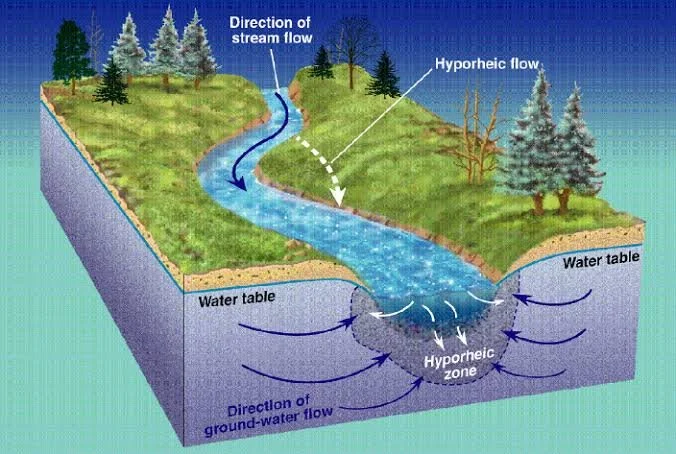
Credit: Freshwater Conservation Canada
Beneath and alongside almost every streambed is a layer of saturated sediment called the hyporheic zone, where surface water and groundwater mix. Water moves back and forth through this zone continuously. Water can travel a few inches through gravel, or migrate many meters through a floodplain, before re-emerging downstream. This helps regulate stream temperature, filters nutrients and pollutants, and provides critical habitat for aquatic insects and young fish, including salmon.
Research on these systems shows the surface and subsurface can stay connected even when a network of isolated pools is all that remains visible. A stream that looks dead in a satellite photo in September may still be actively recharging groundwater, feeding downstream flow, or supporting aquatic life below ground.
A rule built strictly around whether water is visible at the surface year-round doesn't capture the whole story. A stream that goes dry on the surface every summer can still play an outsized role in recharging the aquifers that supply wells, sustain cooler water temperatures for fish downstream, and buffer the watershed during drought. This is precisely the kind of hydrology found throughout the Rogue Basin, where snowmelt and springs commonly interact with groundwater in ways a simple year-round-flow test doesn't reflect.
What Can We Do:
A public comment period opened on September 9, 2026, and will close at 11:59pm on October 9th, 2026. After the comment period closes, the agencies will consider the input alongside the other 220,000 comments already received on the original proposal before issuing a final rule.
This is likely one of the last opportunities for public comment before the definition is finalized. Whatever is decided now will shape water policy debates and lawsuits for years to come, in the Rogue Basin and across the country.
There is still time to voice your concerns to the EPA and protect the unseen waters of the Rogue and millions of other beautiful wetlands and streams across the country.
Make Your Voice Heard:
Submit a comment to the EPA to defend our water resources.
Click the button below to edit our sample letter and submit your comment to the EPA before the comment period closes on October 9, 2026.
Written by Jen Aguayo in September 2026